



Vitamin Types and Benefits: Which Vitamins Are Found in Which Foods?


To maintain a healthy life and ensure that cellular functions work fully, vitamins are the most essential micronutrients for the human body. Our bodies cannot produce most of these organic compounds on their own; therefore, it is essential to obtain them externally, through the daily diet or high-absorption supplements.
Vitamins play a role in countless critical reactions in the body, from energy production to immune defense, and from bone health to skin cell renewal. For a more basic classification, the Vitamins and Vitamin Types article is a good starting point.
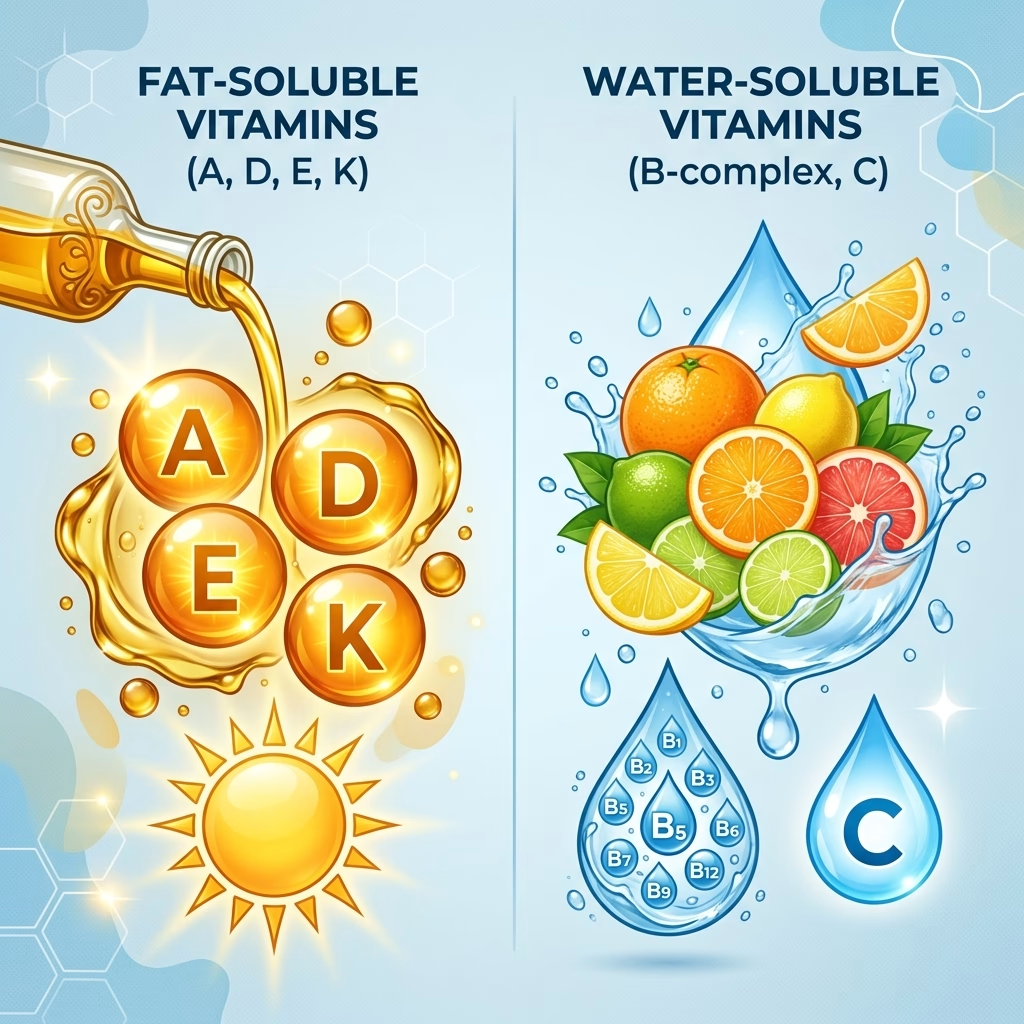
Vitamin Types: Water-Soluble and Fat-Soluble
Science recognizes 13 essential vitamins in total.
1. Fat-Soluble Vitamins (A, D, E, K)
Fat-soluble vitamins need healthy fats in the diet in order to be absorbed from the intestines, and any excess can be stored in the liver and fatty tissues.
- Vitamin A (Retinol): It is essential for eye health, immunity, and cell growth.
- Vitamin D (Calciferol): It is a critical vitamin for bone development, calcium absorption, and a strong immune system.
- Vitamin E (Tocopherol): It is a powerful antioxidant that protects cell membranes from free radicals.
- Vitamin K: It has a vital effect on blood clotting and bone metabolism.
2. Water-Soluble Vitamins (B Complex and Vitamin C)
Water-soluble vitamins are not stored in the body (except B12). Because any excess is excreted through the kidneys, they need to be taken on a regular and daily basis.
- Vitamin C (Ascorbic Acid): It is the best-known defender of the immune system. For more detailed usage and absorption information, you can go to the which vitamin should be taken on an empty stomach and which on a full stomach guide.
- Vitamin B Complex: It is important for energy metabolism and the nervous system.
Why Is It Hard to Meet Daily Vitamin Needs in Modern Life?
Modern farming methods and living conditions can cause losses in the vitamin content of the vegetables and fruits we eat.
Frequently Asked Questions
How many types of essential vitamins are there?
The human body needs 13 essential vitamins in total.
Should vitamin supplements be taken on an empty stomach or on a full stomach?
Fat-soluble vitamins such as A, D, E, and K should be taken on a full stomach.
What causes low 25-hydroxy vitamin D?
The primary cause is not getting enough sunlight.