



The Power of Propolis, Zinc, and Vitamin C: How Can You Support Your Immune System?


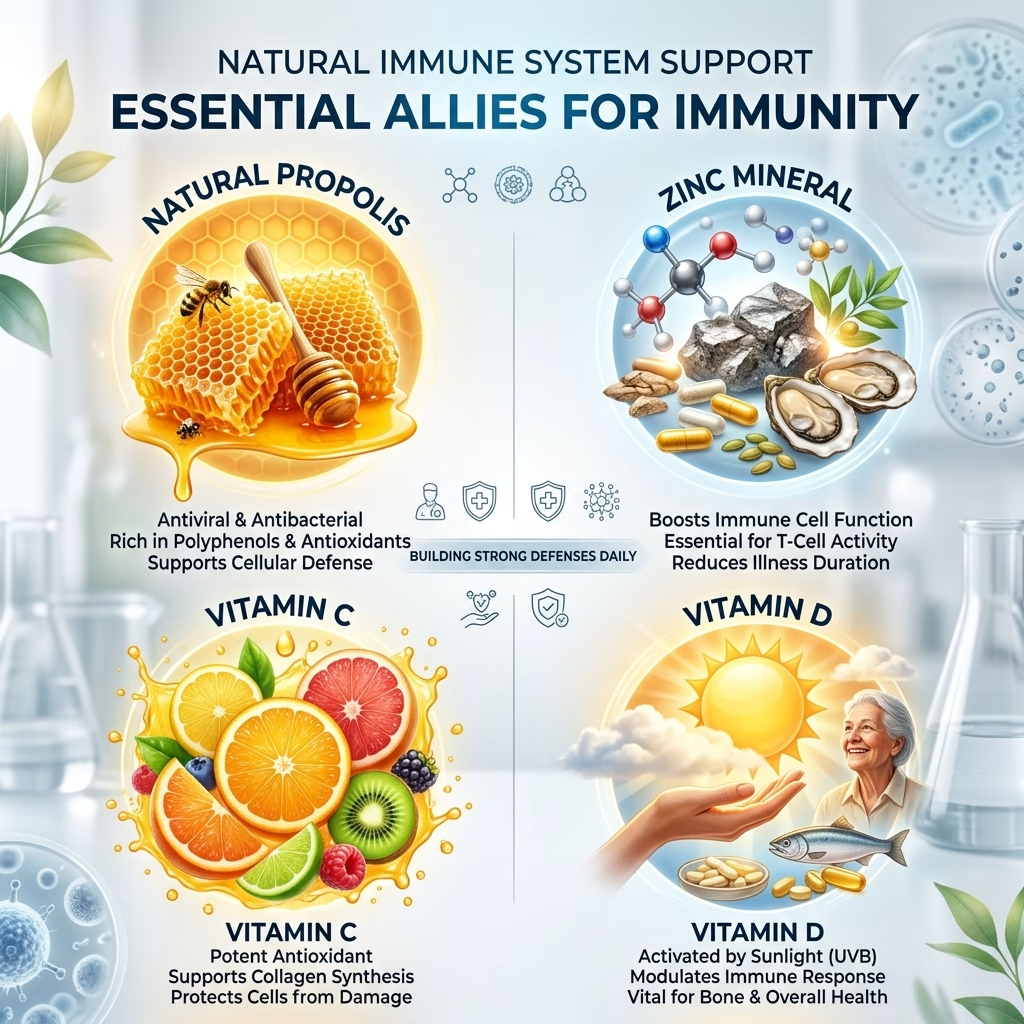
Key Components That Support the Immune System: Propolis, Zinc, Vitamin C, and Vitamin D
Which components can support the immune system? In addition to a balanced diet, micronutrients such as propolis, vitamin C, vitamin D, zinc, and selenium are among the most researched components that contribute to the normal function of the immune system. Especially during periods of intense stress, seasonal transitions, irregular sleep, and inadequate nutrition, these components can help maintain daily defense mechanisms.
1. Why Does the Immune System Weaken?
The immune system is affected by many factors such as insufficient sleep, a busy work pace, irregular meals, low sun exposure, and increased oxidative stress. Elevated free radicals can suppress defense systems at the cellular level. For this reason, antioxidants and micronutrients that support immune functions are important for balancing the burden of modern life.
Especially during seasonal transitions, energy expenditure increases as the body adapts to temperature changes, and the need for micronutrients rises. Combined with inadequate nutrition, these periods are critical times in which the body’s defense capacity is strained. If you would like to consider this picture in a broader frame, you can also take a look at our what you need for a strong immune system guide.
2. Propolis: The Natural Shield of Bees
Propolis is a resinous natural substance that bees produce to protect the hive from external factors. It contains more than 300 bioactive compounds, including flavonoids, phenolic acids, terpenes, and aromatic aldehydes. In the literature, propolis draws attention for its high antioxidant capacity and cellular protective effects.
A comprehensive review published in 2013 in the journal Advances in Pharmacological Sciences documented in detail the broad spectrum of biological activity stemming from propolis’s multi-compound structure [1]. This study shows that propolis may play the role of a shield that supports cellular integrity, particularly against oxidative stress.
3. Vitamin C and Zinc Synergy: Why Are They Stronger Together?
When evaluated together, vitamin C and zinc are one of the strongest duos in the immune category:
- Vitamin C: Contributes to the protection of cells from oxidative stress, helps reduce tiredness and fatigue, and supports energy metabolism by increasing iron absorption.
- Zinc: Contributes to the normal function of the immune system, plays a role in cell division, and is necessary for normal protein synthesis.
Meta-analyses published in the Cochrane Database show that vitamin C supplementation may help reduce the duration and severity of the common cold [2]. Bringing these two components together synergistically in a single formula optimizes the absorption process in the body.
4. Vitamin D: Not Just Bones, but Immunity Too
Although vitamin D is associated by most users only with bone health, it has a much broader sphere of effect because it contributes to the normal function of the immune system. It also plays a role in cell division and helps maintain muscle function.
Especially in winter months, vitamin D synthesis decreases as sun exposure declines. During these periods, maintaining vitamin D levels through external supplementation is important for the normal course of immune functions. We have also gathered the daily sources of vitamin D in our foods containing vitamin D article.
5. The Complementary Role of Selenium
Selenium, as a powerful antioxidant mineral, contributes to the protection of cells from oxidative stress. It also supports normal thyroid function and contributes to the normal functioning of the immune system. A comprehensive review published in the journal Nutrients in 2020 examined in detail the synergistic effects of zinc, selenium, and vitamins C and D on immunity [3].
6. Who Might It Be Suitable For?
- Those who often feel tired during seasonal transitions: Individuals who experience energy dips, especially in the autumn-winter periods.
- Those who work under intense stress: Professionals who need immune support under irregular sleep and chronic stress.
- Those with irregular nutrition: People whose daily micronutrient intake is insufficient and who eat mainly fast food.
- Indoor workers: Office workers who have low sun exposure and are looking for support on the vitamin D side.
- Individuals over 60: Adults who want to support the immune capacity that declines with age.
7. Frequently Asked Questions
Does propolis cause allergies?
People with an allergy to bee products or pollen should definitely consult a health professional before using propolis. In people with no known allergy, propolis is generally well tolerated.
Should zinc be taken on an empty or full stomach?
In some individuals, zinc can cause stomach sensitivity (nausea) on an empty stomach. Therefore, in most cases it is more comfortable to take it on a full stomach, with a meal.
At what time of day should vitamin C be taken?
Because it is water-soluble, vitamin C provides the best absorption when taken in the morning on an empty or lightly full stomach. Building a habit of regular daily use is more important than the choice of timing.
Can vitamin D and vitamin C be taken at the same time?
Yes. Since these two vitamins use different metabolic pathways, there is no known interaction problem when they are taken together. Vitamin D provides the best absorption when taken with a fatty meal, and vitamin C when taken with water.
All These Components in a Single Formula: Qualiss Q More
Support your immune system not randomly, but with scientifically combined ingredients. Qualiss® Q More, which contains vitamin C, vitamin D, zinc, selenium, propolis, and probiotics, is a strong daily support option.
Scientific Sources and References
- [1] Wagh, V. D. (2013). Propolis: A Wonder Bees Product and Its Pharmacological Potentials. Advances in Pharmacological Sciences, 2013, 308249. PubMed
- [2] Hemila, H., Chalker, E. (2013). Vitamin C for preventing and treating the common cold. Cochrane Database of Systematic Reviews.
- [3] Gombart, A. F., Pierre, A., Maggini, S. (2020). A Review of Micronutrients and the Immune System. Nutrients, 12(1), 236. PubMed